NexaRAM
What is DDR5 RAM? This memory technology represents a significant advancement in the computing landscape. With the global demand for high-performance computing systems growing, DDR5 RAM is becoming essential. According to a recent report by TrendForce, the DDR5 market is expected to reach $20 billion by 2025. This implies a projected growth rate of over 25% annually.
DDR5 RAM offers notable benefits, including increased speed and efficiency. It can achieve data rates exceeding 8400 MT/s, significantly outperforming its predecessor, DDR4. This improvement is crucial for gamers, content creators, and data analysts looking for faster processing speeds. However, despite these advantages, the transition to DDR5 has not been without challenges. Compatibility issues with older hardware may hinder some users.
Understanding what DDR5 RAM brings to the table is vital. It enhances multitasking and supports higher bandwidth applications. While the technology shows great promise, buyers should consider their specific needs. It is essential to weigh the benefits against potential drawbacks. Insights from industry experts indicate a cautious yet optimistic outlook for DDR5's role in the future of computing.
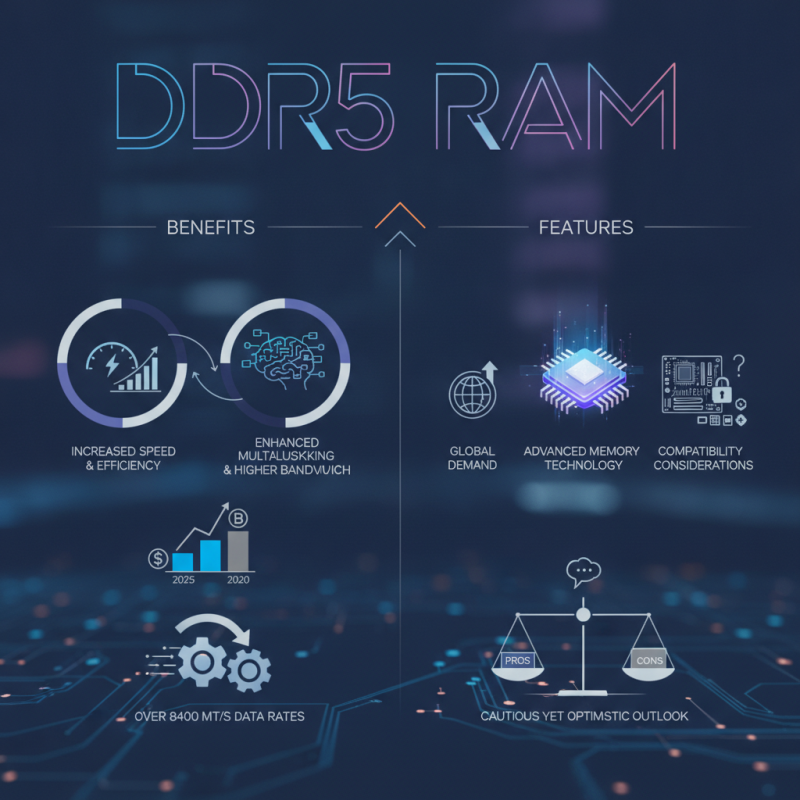
DDR5 RAM represents a significant advancement in memory technology. This new generation of RAM brings impressive improvements over its predecessor. It supports higher bandwidth, which is essential for demanding applications. Increased speeds lead to better performance, especially in gaming and data-heavy tasks. Consumers seeking speed will find DDR5 appealing.
The specifications of DDR5 RAM are noteworthy. It features double the capacity per module compared to DDR4, allowing for more data to be processed simultaneously. The default speed starts at 4800 MT/s, which is a substantial upgrade. With efficiency at its core, DDR5 also consumes less power. However, users should consider compatibility issues with older systems.
While DDR5 is promising, there are challenges. The availability of compatible devices may be limited. Pricing can also vary, leading to potential budgeting concerns. As this technology matures, it’s essential for buyers to evaluate their specific needs closely. Will the benefits of DDR5 RAM justify the investment for them? Exploring these aspects can ensure informed choices in a rapidly evolving market.
This chart compares the benefits and features of DDR5 RAM against DDR4 RAM, showcasing improvements in speed, bandwidth, capacity, and power consumption. DDR5 RAM offers significantly higher performance metrics, making it a key consideration for global buyers looking to upgrade their systems.
DDR5 RAM represents a significant leap forward in memory technology. One of its key advantages is increased data transfer speeds. DDR5 can exceed 8400 MT/s, nearly double the performance of its predecessor. This means faster application loading times and smoother multitasking experiences.
Moreover, DDR5 offers improved efficiency. It operates at a lower voltage, which reduces energy consumption. This is crucial for mobile devices and laptops, where battery life is a priority. The memory also supports larger capacities, allowing for up to 128GB per module. This is important for heavy applications like gaming and 3D rendering.
While the benefits are clear, there are challenges. Compatibility with existing systems can be a concern. Buyers should assess whether their hardware supports DDR5. As technology evolves, users must weigh the pros against the adjustments needed for new standards. Balancing these elements is vital for making informed decisions.
DDR5 RAM introduces significant performance enhancements, particularly in speed and bandwidth. This next-generation memory module provides a data rate starting from 4800 MT/s, which is nearly double that of its predecessor, DDR4. According to industry reports, DDR5 can reach up to 8400 MT/s, allowing for faster data access and improved multitasking capabilities. This upgrade can greatly impact performance in demanding applications, such as gaming and video editing.
Bandwidth is equally impressive, with DDR5 offering a peak bandwidth of 64 GB/s. This allows systems to handle multiple high-bandwidth workloads simultaneously. Benchmark tests demonstrate that DDR5 memory delivers a noticeable improvement in frame rates during gaming, surpassing DDR4 by a substantial margin in various scenarios. However, while this technology promises significant advancements, it also comes with higher costs and potential compatibility issues. Buyers must carefully assess whether the benefits outweigh the challenges, especially for systems designed around older standards.
The energy efficiency of DDR5 also deserves attention. Operating voltage is reduced to 1.1V compared to 1.2V in DDR4, which contributes to lower power consumption. Nevertheless, the real-world implications of this efficiency shift depend on the specific use cases. Users should evaluate their current setups before making an investment in DDR5. The potential rewards are substantial, but it’s important to ensure that the transition aligns with both performance needs and budget considerations.
DDR5 RAM brings significant advancements to gaming and high-performance computing.
With its increased bandwidth and faster data transfer rates,
gamers and professionals can expect smoother experiences. Imagine playing the latest titles at ultra-settings
with minimal lag. This kind of performance boost is essential for immersive gaming.
High-performance computing benefits too. DDR5 supports larger capacities, allowing users to handle
demanding tasks like video rendering or complex simulations.
This can lead to shorter processing times and improved efficiency. However, not all systems immediately support DDR5.
Upgrading may require new motherboards or other components.
Yet, the transition to DDR5 raises questions. Does the increased speed truly translate to noticeable benefits for all users? Some may find DDR4 sufficient for their needs.
Moreover, as prices fluctuate, balancing between performance and cost
is vital. Thus, while DDR5 promises potential, careful consideration is essential for effective use.
The rise of DDR5 RAM marks a significant shift in memory technology. With a data rate up to 8400 MT/s, DDR5 provides a noticeable performance boost. This is particularly relevant for applications like AI and big data analytics, where speed is crucial. Recent studies indicate that DDR5 can improve performance by over 30% compared to DDR4, making it a vital component for future-proofing computing systems.
Emerging technologies rely heavily on advanced memory solutions. For instance, in gaming, the demand for high-speed data retrieval is increasing. A report from the International Data Corporation (IDC) highlights that the gaming industry expects to see a 50% rise in the need for RAM-intensive applications by 2025. Similarly, the 5G rollout will create new opportunities for DDR5, as mobile devices require faster and more efficient memory solutions.
Despite these advancements, challenges remain. Manufacturing costs for DDR5 are higher, and the transition from DDR4 may cause supply chain issues. Buyers should keep these factors in mind. The full potential of DDR5 will shine as compatibility improves with devices. As businesses increasingly adopt newer technologies, the stakes for effective memory solutions rise alongside them.
| Feature | Description | Benefit |
|---|---|---|
| Increased Bandwidth | DDR5 RAM offers higher bandwidth than its predecessors, allowing for faster data transfer rates. | Improves overall system performance for applications requiring high data throughput. |
| Higher Capacity | Supports larger memory capacities per module, facilitating the use of high-performance applications. | Enables better multitasking and improved performance in memory-intensive tasks. |
| Enhanced Power Efficiency | Operates at lower voltage levels compared to previous generations, leading to reduced power consumption. | Lower energy costs and extended battery life in portable devices. |
| Improved Latency | Features advancements to reduce latency, enhancing responsiveness in data-heavy tasks. | Provides a more fluid experience in gaming and high-demand computing scenarios. |
| On-Die ECC | Error Correction Code integrated within the module design for enhanced reliability. | Increases data integrity and system stability, essential for critical applications. |
M over previous generations?
DDR5 enhances gaming with smoother experiences and minimal lag, especially at ultra-settings in demanding titles.
Yes, it supports larger capacities, allowing efficient handling of tasks like video rendering and complex simulations.
Compatibility with existing hardware is crucial. Users should check if their systems support DDR5 before upgrading.
Some users may find DDR4 adequate for their needs. It depends on the software and tasks they engage in.
Higher manufacturing costs and potential supply chain issues can hinder DDR5's transition from DDR4.
DDR5 is essential for applications like AI and big data analytics, providing significant performance boosts.
The growing gaming industry and the rollout of 5G technology are expected to increase demand for high-speed memory.
Yes, fluctuating prices make it necessary to assess performance against costs for effective budget decisions.
As more devices support DDR5, users will experience its full potential, allowing for better overall performance.
What is DDR5 RAM? It represents the latest advancement in memory technology, characterized by significant improvements in speed, bandwidth, and efficiency compared to its predecessors. With a focus on higher data rates and improved power management, DDR5 RAM enhances overall system performance, making it particularly beneficial for gaming and high-performance computing applications.
The key advantages of DDR5 RAM include its ability to handle more data simultaneously and support for advanced features that facilitate emerging technologies. As systems increasingly demand higher performance, DDR5 RAM will play a crucial role in driving innovations, ensuring that users experience faster processing and more responsive applications across various platforms. The future of computing technology is set to be significantly shaped by the capabilities of DDR5 RAM.
