NexaRAM
NexaRAM
NexaRAM
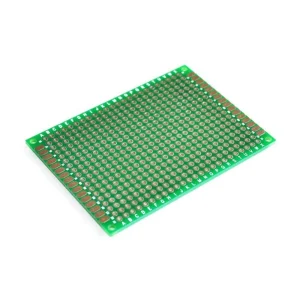
In the rapidly evolving landscape of global technology, the Printed Circuit Board (PCB) serves as the fundamental bedrock of all electronic devices. From simple consumer appliances to complex industrial automation systems, the quality of a PCB determines the reliability, efficiency, and longevity of the final product. As a professional manufacturer and exporter of Double-Sided and Single-Sided PCBs, we bridge the gap between abstract electronic design and tangible hardware reality.
Our manufacturing philosophy centers on versatility and precision. Single-sided PCBs remain the cost-effective backbone for high-volume, less complex consumer electronics, utilizing a conductive copper layer on one side. Conversely, our Double-Sided PCB solutions leverage conductive materials on both sides, interconnected via "vias," allowing for higher component density and more complex circuit routing. This capability is critical for modern OEM requirements where space optimization and high-performance signal integrity are non-negotiable.
The global electronics market is currently undergoing a structural shift driven by the "Industry 4.0" paradigm. Supply chain resilience, rapid prototyping, and the ability to scale from a single prototype to mass production are the metrics by which manufacturing success is measured today.
Operating as a premier exporter, we understand that technical excellence is only half the equation; regulatory compliance is the other. We adhere to stringent international standards, ensuring that our products meet environmental and safety regulations for markets in North America, Europe, and Southeast Asia. Our supply chain ecosystem involves over 850 strategic partners, allowing us to source high-grade semiconductor materials and substrates even during market fluctuations.
As we look toward the future, the PCB industry is moving toward "Miniaturization" and "High-Frequency" requirements. Our R&D investment is heavily focused on:
A: Double-sided PCBs allow for complex circuit layouts and increased component density. This is essential for modern devices that require more functionality in a smaller physical footprint, which a single-sided board cannot accommodate.
A: We employ a multi-stage quality control process, including automated optical inspection (AOI) and rigorous burn-in reliability testing, managed by a dedicated team of 35 inspectors to ensure every board meets strict performance parameters.
A: Absolutely. Our core business model is built on providing flexible customization—from frequency tuning and PCB layout optimization to custom thermal solutions—tailored specifically to your project's technical specifications.