NexaRAM NexaRAM

DDR5 vs DDR4 Which One is Better for Your Needs?

Time:2026-06-12 Author:Ethan
0%

When considering memory options for your computer, the "DDR5 vs DDR4 comparison" is crucial. Both technologies serve different purposes. In recent years, DDR5 has emerged with significant advancements. It offers faster speeds and increased bandwidth. Many gamers and professionals might lean toward DDR5. However, DDR4 still holds value for many users.

DDR4 remains a reliable choice for general use. It is widely available and usually more affordable. The price difference can be a deciding factor for budget-conscious buyers. Some may find DDR4 sufficient for their tasks. The choice depends on your specific needs.

In the end, every user will weigh these factors differently. DDR5 may provide better performance, but DDR4 might still be perfect for casual tasks. Consider what you use your computer for before making a decision. It's essential to reflect on your needs and budget to make the best choice.
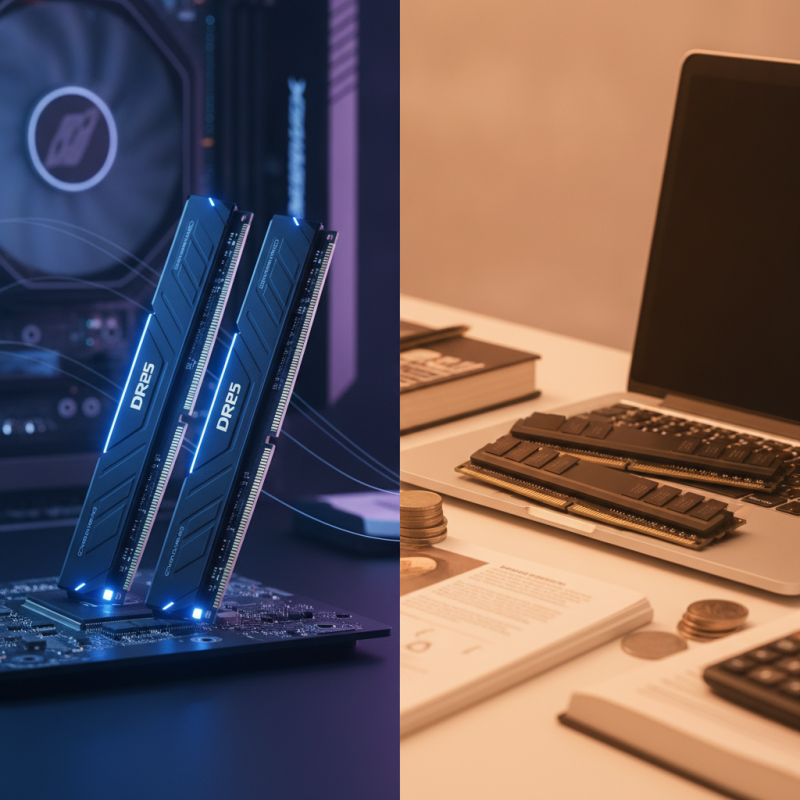
DDR5 vs DDR4 Which One is Better for Your Needs?

Understanding DDR4 and DDR5 Memory Technologies

When comparing DDR4 and DDR5 memory technologies, it’s essential to grasp their unique characteristics. DDR4 has been the standard for several years due to its reliability and sufficient speed for most tasks. It supports up to 3200 MT/s, making it adequate for everyday computing and gaming. On the other hand, DDR5 is the latest advancement, reaching speeds up to 8400 MT/s. This increase in bandwidth is crucial for memory-intensive applications, such as content creation and high-end gaming.

Tips: If you’re a casual user, DDR4 might serve your needs well without breaking the bank. However, if you plan to engage in high-performance tasks, consider DDR5’s benefits. It’s worth reflecting on whether you truly need that extra speed, given the higher cost of DDR5.

Compatibility is another factor. Not all motherboards can support DDR5, so ensure your hardware aligns with your chosen memory type. You might face compatibility issues if you decide to upgrade arbitrarily. Balancing current needs and future-proofing is vital in this decision. Evaluate where you spend most of your computing time to make the best choice.

DDR5 vs DDR4: Which One is Better for Your Needs?
Feature DDR4 DDR5
Release Year 2017 2020
Data Transfer Rate 2133 - 3200 MT/s 4800 - 8400 MT/s
Voltage 1.2V 1.1V
Maximum Capacity per Module 16GB 64GB
Channel Architecture Single Channel Dual Channel
Latency 15-19 ns 18-24 ns
Usage Scenario Gaming, General Use Gaming, High-Performance Computing

Key Differences Between DDR4 and DDR5 Performance

When evaluating DDR4 and DDR5, performance differences come to the foreground. DDR5 offers higher bandwidth compared to DDR4. This means faster data transfer rates, which can enhance overall system performance. Developers and gamers can benefit significantly from this improvement. However, DDR5 is generally more expensive and may not deliver noticeable gains for everyday tasks.

Latency also plays a crucial role in this comparison. DDR4 typically has lower latency, making it suitable for applications where quick data access is vital. Users focused on speed-sensitive tasks might not find DDR5's advantages compelling. In scenarios like gaming or basic computing, the enhancements in DDR5 may not justify the cost.

Another key aspect is compatibility. DDR5 motherboards are not backward compatible with DDR4. This lack of interchangeability may pose a challenge for users looking to upgrade their systems. Therefore, understanding individual needs and usage patterns is essential. A careful assessment can guide you in making a choice that aligns with performance requirements and budget constraints.

Compatibility Considerations for DDR4 and DDR5

When considering DDR4 and DDR5 memory, compatibility is a crucial factor. DDR4 has been the standard for many years, and most existing motherboards only support it. Switching to DDR5 often requires a new motherboard. This transition might not be worth it for users with older systems. Many people choose to stick with DDR4 due to its reliability and proven performance.

However, DDR5 offers advanced features and improved speeds. If your motherboard supports it, you may experience faster data transfer rates. It's essential to ensure that your CPU is also compatible with DDR5. Incompatible components can lead to issues or even system failure. Don’t overlook the potential need for BIOS updates, which can complicate the upgrade process.

Price is another consideration. DDR5 is often more expensive. Weighing the benefits against the cost becomes essential for budget-conscious users. Upgrading your RAM should align with your computing needs, whether that’s gaming, content creation, or basic tasks. Ensure all components work together seamlessly to avoid frustrations later.

Cost Analysis: DDR4 vs DDR5 for Budget Planning

When deciding between DDR4 and DDR5, a thorough cost analysis is essential for effective budgeting. DDR4 has been widely used for years. It's generally more affordable than DDR5. Many users opt for DDR4 due to its established reliability and lower price point. This option suits casual gamers or office users who need decent performance without breaking the bank.

On the other hand, DDR5 offers improved speed and efficiency. It can lead to better overall performance in demanding tasks. However, this comes with a higher price tag. Users must weigh the benefits of faster speeds against their budget. Upgrading to DDR5 may be tempting, but consider the potential need for a compatible motherboard.

Finding the right balance can be challenging. DDR5's advanced capabilities may not justify the cost for all users. It’s important to assess individual needs and budget constraints. The choice ultimately depends on what suits each user's specific situation. A careful evaluation ensures that the selected memory meets expectations without overspending.

Use Cases: When to Choose DDR4 or DDR5 Based on Needs

When deciding between DDR4 and DDR5, it’s essential to assess your specific needs. DDR4 remains a robust choice for general computing tasks. It is cost-effective and widely compatible. For gaming and everyday applications, DDR4 often meets performance needs while providing sufficient speed. With some reports stating that DDR4 offers more than 25% cost savings compared to DDR5, budget-conscious users may prefer this option.

On the other hand, DDR5 is designed for high-performance applications. If you are into intensive gaming, video editing, or machine learning, DDR5 might be the better choice. It offers higher bandwidth and support for greater capacities. Some studies highlight that DDR5 can deliver up to a 50% increase in data rates compared to DDR4. This improvement is significant for tasks requiring high-speed memory access.

**Tip:** Always check your motherboard compatibility before upgrading. Not all motherboards support DDR5 yet.

Another consideration is power efficiency. DDR5 offers improved power management features which can lead to lower energy consumption over time. But if you don't require the latest technology, DDR4’s efficiency can still be adequate for many uses. Balance your needs against performance gains when making your choice.

DDR5 vs DDR4 Performance Comparison

FAQS

: What are the main differences between DDR4 and DDR5 memory technologies?

: DDR4 supports speeds up to 3200 MT/s, while DDR5 reaches 8400 MT/s. DDR5 offers higher bandwidth for demanding tasks.

Is DDR4 sufficient for casual use?

Yes, DDR4 is reliable and cost-effective. It meets everyday computing needs and gaming for most users without excessive spending.

Why might someone consider upgrading to DDR5?

DDR5 provides improved speed and efficiency, making it ideal for high-performance tasks like gaming and content creation.

What should users consider when budgeting for memory?

DDR4 is generally cheaper than DDR5. Weigh performance benefits against budget constraints before deciding on an upgrade.

How important is motherboard compatibility when choosing memory?

Very important. Not all motherboards support DDR5. Check compatibility to avoid issues during upgrades or installations.

Are there energy consumption differences between DDR4 and DDR5?

Yes, DDR5 features improved power management, potentially lowering energy costs. But DDR4 remains efficient for many tasks.

Can upgrading to DDR5 be worth the cost?

It depends on the user’s needs. Evaluate if the performance improvements justify the additional spending for your situation.

When should someone choose DDR4 over DDR5?

Choose DDR4 for general tasks and budget constraints. It meets most requirements without the higher costs associated with DDR5.

How does DDR5 impact performance for intensive tasks?

DDR5 can deliver up to a 50% increase in data rates, which is significant for tasks that require high-speed memory access.

What is a common mistake users make when upgrading?

Upgrading without confirming motherboard compatibility can lead to wasted time and money, so always check before purchasing.

Conclusion

In the DDR5 vs DDR4 comparison, understanding the distinctions between these two memory technologies is crucial for determining the best fit for your computing needs. DDR5 boasts improvements in speed and bandwidth, offering enhanced performance for demanding applications, while DDR4 remains a solid choice for more budget-conscious users or less intensive tasks.

Compatibility is another important consideration, as older systems may only support DDR4, meaning upgrades might require new hardware. A thorough cost analysis reveals that while DDR5 can provide superior performance, it often comes at a higher price point. Ultimately, choosing between DDR4 and DDR5 should be guided by specific use cases, balancing performance requirements with budgetary constraints.

Ethan

Ethan

Ethan is a seasoned marketing professional with a deep expertise in our company's innovative product line. With a passion for sharing knowledge and insights, he takes the lead in regularly updating our corporate blog, where he explores industry trends, product features, and effective marketing......