In the world of memory technologies, the distinction between DRAM and SRAM is crucial for buyers. Understanding the "DRAM vs SRAM difference" can help you make informed decisions. As Dr. Linda Chen, a leading expert in semiconductor technology, aptly states, "Choosing the right type of memory depends on the specific needs of your application."
DRAM (Dynamic Random Access Memory) is known for its high density, making it suitable for larger storage requirements. On the other hand, SRAM (Static Random Access Memory) offers increased speed but at a higher cost and lower density. Each has its unique advantages and drawbacks, affecting performance and price.
When considering these options, it’s essential to reflect on your requirements. Are you prioritizing speed or density? Understanding these trade-offs could lead to better investment outcomes. The "DRAM vs SRAM difference" is significant and demands careful examination. Remember, what works best in theory may not fit real-world applications seamlessly.
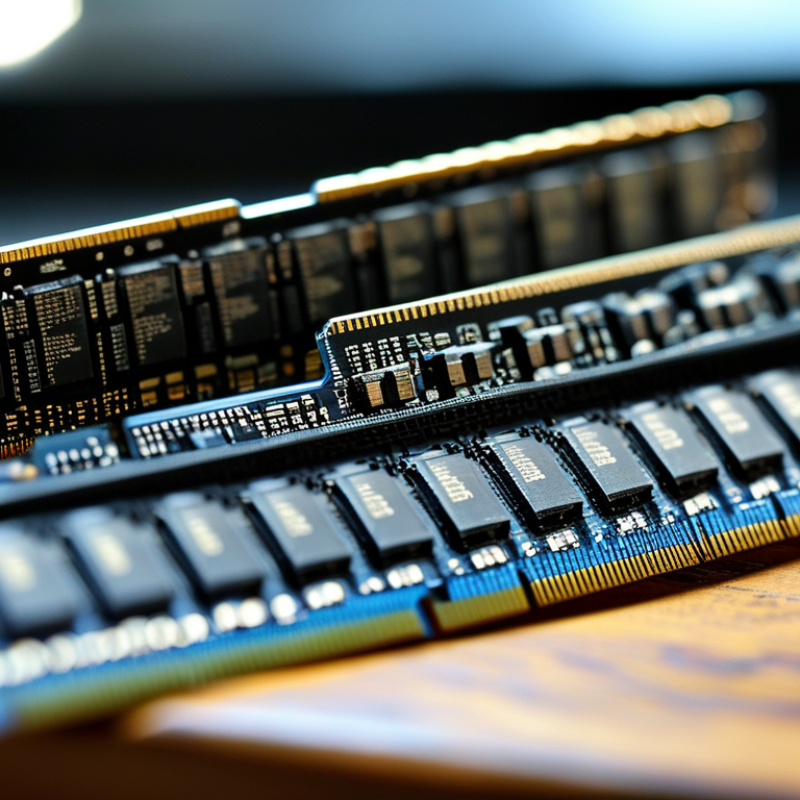
Key Characteristics of DRAM and SRAM
Dynamic Random-Access Memory (DRAM) and Static Random-Access Memory (SRAM) serve crucial roles in computing. Understanding their characteristics can help buyers make informed decisions. DRAM stores bits in cells composed of a capacitor and a transistor. This design makes DRAM compact and cost-effective but slower in access speed. It requires constant refreshing to maintain data integrity. This refreshing process can consume power and affect performance in high-speed applications.
In contrast, SRAM uses a different architecture. It relies on flip-flops to store data. This technology allows for faster access times and better performance in cache memory applications. SRAM does not require refresh cycles, which means it can maintain data without constant power. However, it is more expensive and less dense than DRAM, leading to higher costs for manufacturers and consumers.
When choosing between DRAM and SRAM, consider application requirements carefully. Analyze speed, power consumption, and cost implications. Recognizing these key differences can directly influence the performance and efficiency of your computing solutions. Always reflect on specific needs before making a final decision.
DRAM vs SRAM Key Differences Every Buyer Should Know
| Feature |
DRAM |
SRAM |
| Type of Memory |
Dynamic |
Static |
| Speed |
Slower |
Faster |
| Data Retention |
Needs periodic refresh |
Retains data without refresh |
| Cost |
Lower |
Higher |
| Density |
Higher density |
Lower density |
| Applications |
Main memory in computers |
Cache memory |
Performance Comparison: Speed and Latency Differences
When comparing DRAM and SRAM, speed and latency are key factors that affect performance. DRAM typically offers higher density and lower cost per bit, but it comes with higher latency. For instance, DRAM latency can be around 50 nanoseconds, significantly slower than SRAM, which can achieve latencies as low as 10 nanoseconds. This speed difference is crucial in applications requiring fast data access, such as cache memory for CPUs.
However, DRAM refresh cycles create delays. This means DRAM must pause to refresh periodically, impacting overall speed. In contrast, SRAM does not require such refreshing, making it faster for applications where speed is critical, like in processor caches. According to the International Technology Roadmap for Semiconductors, SRAM is favored in high-performance tasks due to its quicker data access times despite being more expensive and less dense than DRAM.
On the latency front, industry benchmarks indicate that SRAM can deliver nearly three to four times the speed of DRAM in certain scenarios. Nevertheless, this comes with trade-offs. SRAM, while faster, consumes more power and occupies more chip area. These characteristics make it essential to assess the specific needs of the project. A well-rounded analysis is vital for buyers navigating the differences between these two memory types.
DRAM vs SRAM Performance Comparison: Speed and Latency
This chart illustrates the key performance metrics of DRAM and SRAM in terms of speed (in nanoseconds) and latency (in cycles). As we can see, SRAM is significantly faster with lower latency, making it suitable for cache memory, while DRAM, although slower, offers higher density for main memory applications.
Power Consumption: DRAM vs SRAM Energy Efficiency
When comparing DRAM and SRAM, energy efficiency is a critical aspect. DRAM (Dynamic Random-Access Memory) tends to consume less power during its operation. According to a report by IHS Markit, DRAM uses about 1/10th the power of SRAM when idle, which makes it suitable for energy-sensitive applications like mobile devices. This power efficiency allows for longer battery life in smartphones and tablets, where minimizing energy consumption is vital.
In contrast, SRAM (Static Random-Access Memory) is faster but consumes more power. While it is typically used for cache memory in CPUs, its power requirements can be high. Industry data shows that SRAM can require up to 8 times more power than DRAM when actively accessing data. This higher consumption poses challenges for battery-operated devices. Moreover, the manufacturing cost of SRAM is generally higher, limiting its use to specific applications where speed is paramount.
Every designer must weigh the trade-offs. The decision between DRAM and SRAM can be complex. Context matters. For applications that emphasize speed, SRAM might be justified. However, in energy-conscious scenarios, opting for DRAM often proves beneficial.
Cost Analysis: Pricing and Economic Considerations
When considering DRAM and SRAM, cost is a vital factor for buyers. According to industry reports, DRAM is significantly cheaper than SRAM. As of 2023, the average price per gigabyte of DRAM is approximately $3, while SRAM can exceed $25 per gigabyte. This stark difference impacts project budgets, especially for high-volume applications.
However, cost alone does not dictate the choice between these memory types. DRAM offers higher density but comes with slower access times compared to SRAM. SRAM, on the other hand, provides faster speeds and is ideal for cache memory. Buyers must look at performance requirements closely. If speed is essential, investing in SRAM might be justified despite the higher costs.
Economically, the choice can also depend on the specific application. For example, embedded systems may favor SRAM for its speed, while consumer electronics can leverage the price advantage of DRAM. Ultimately, understanding both the upfront costs and long-term performance is crucial for buyers. Making an informed decision demands careful analysis of both immediate financial impact and overall system performance.
Use Cases: Where to Choose DRAM or SRAM
When deciding between DRAM and SRAM, understanding their use cases is crucial.
DRAM, or Dynamic Random-Access Memory, is widely used in systems requiring large amounts of memory, such as
personal computers and servers. According to the 'Global DRAM Market Report 2023', approximately 70% of memory applications
utilize DRAM due to its cost-effectiveness and high density. This makes it the go-to choice for tasks that demand extensive data storage, such
as gaming and video editing.
On the other hand, SRAM, or Static Random-Access Memory, excels in speed. It is typically used in applications where performance
is critical, like cache memory in processors. Research from technical journals indicates that SRAM can offer access speeds
up to three times faster than DRAM. This speed advantage is crucial for tasks that
require quick read and write cycles. However, SRAM is more expensive to produce and provides lower density compared to DRAM,
which can limit its applications in larger-scale storage. Thus, selecting between these two types depends largely on specific project requirements
and budget constraints.
FAQS
It requires constant refreshing to keep data intact. This can impact performance and power use.
SRAM stands for Static Random-Access Memory. It uses flip-flops to store information.
SRAM does not need refresh cycles, providing quicker access times, especially for cache memory.
DRAM is typically cheaper and denser, while SRAM is more expensive and occupies more space.
DRAM latency is around 50 nanoseconds, while SRAM can be as low as 10 nanoseconds.
DRAM is less favorable for high-speed tasks due to its refresh cycles and higher latency.
Assess speed, power consumption, and cost. Reflecting on specific needs is crucial.
SRAM generally consumes more power, especially in high-speed applications.
Yes, while SRAM is faster, it is also more costly and less dense than DRAM. Consider this carefully.
Conclusion
When considering the **DRAM vs SRAM difference**, it's essential to understand their key characteristics and potential applications. DRAM (Dynamic Random Access Memory) is typically slower and has higher latency compared to SRAM (Static Random Access Memory), which offers faster speeds and lower latency, making it suitable for cache memory in processors. However, this speed comes at a cost, as SRAM is generally more expensive to produce, resulting in a higher price point for systems that utilize it.
Furthermore, power consumption plays a critical role in the decision-making process; while DRAM is more energy-efficient during operation, SRAM consumes more power but benefits from lower energy usage in idle states. Ultimately, the choice between DRAM and SRAM heavily depends on the specific use case, budget constraints, and performance requirements dictated by the application in question. Understanding these nuances helps buyers make informed decisions about which memory type is best for their needs.
 NexaRAM
