NexaRAM
DDR5 is more than a faster memory label. Its architecture changes how data moves through a system, affecting performance, power use, and platform design. JEDEC’s DDR5 standard specifies transfer rates beginning at 4,800 MT/s, compared with DDR4’s 3,200 MT/s baseline. DDR5 DIMMs also use two independent 32-bit subchannels, giving memory controllers more flexibility when handling data requests.
For global buyers, these details matter at the point of purchase. A server operator may care about bandwidth per processor socket; a laptop manufacturer may focus on power and board constraints. Compatibility still deserves attention: DDR5 modules require a DDR5-capable motherboard and processor, and published speed ratings do not guarantee identical results across systems. Small details, such as module capacity and rank configuration, can change the outcome.
A useful “DDR5 architecture explained” guide should connect standard specifications with real purchasing decisions. JEDEC’s JESD79-5 series is the primary reference for DDR5 device requirements, while manufacturer datasheets help buyers check specific modules. I can’t verify a source-backed quotation from a named DDR5 expert using the materials provided, so I won’t invent one. That limitation matters. Technical buying advice should distinguish published standards from marketing claims—and should leave room for careful review when workloads, budgets, and supply conditions differ.
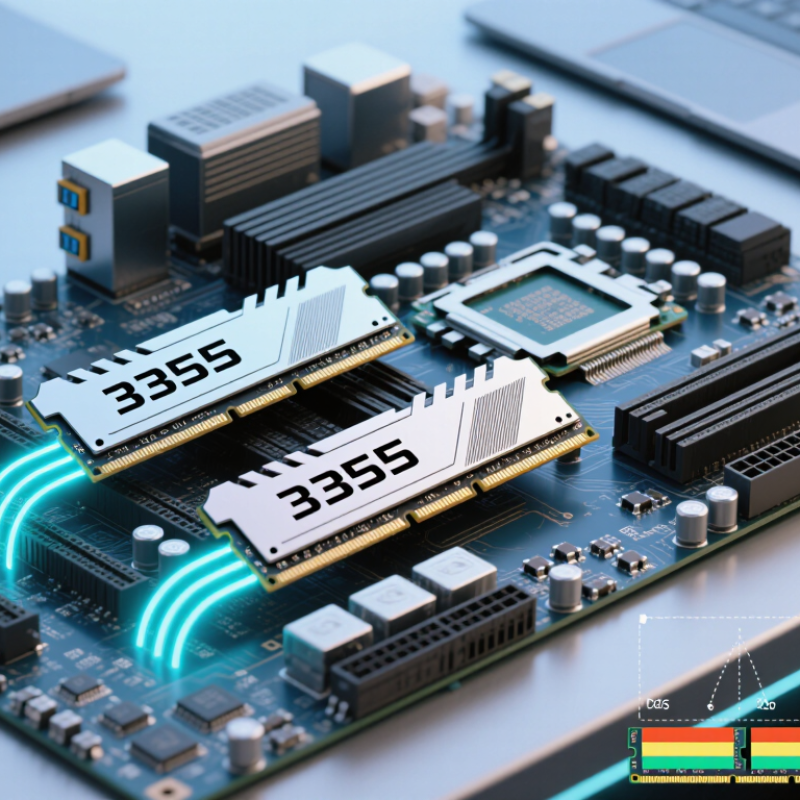
DDR5 architecture is more than a higher speed rating. The JEDEC JESD79-5 standard defines the generation’s core design, including two independent 32-bit subchannels per unbuffered module. Compared with DDR4’s single 64-bit channel, this arrangement can improve access flexibility and help serve more simultaneous requests. The change matters in workloads where processors handle many small data transactions. It does not guarantee faster performance in every computer.
DDR5 also moves power management onto the memory module and lowers standard operating voltage to 1.1 volts, according to JEDEC’s specification. A module’s power-management integrated circuit regulates incoming power locally. That can support more controlled delivery, though heat and system design still matter. The standard introduced on-die error-correcting code, which detects and corrects certain errors inside each memory chip. It is not a replacement for system-level ECC.
Data rates began at 4,800 megatransfers per second in the DDR5 standard, a useful baseline when comparing specifications. Higher figures are available, but buyers should check supported processor speeds, module capacity, and motherboard configuration. Small details count. A fast module cannot overcome an incompatible platform, and advertised peak rates may require particular settings. One limitation is easy to miss: architecture describes capability, not the result a buyer will see in every workload.
DDR5 differs from earlier memory generations in how it moves and manages data. A standard DDR5 module provides two independent 32-bit subchannels, rather than one 64-bit channel. This can improve access efficiency when a processor handles several requests at once. The change is architectural, not just a higher number printed on a product label.
DDR5 also supports higher data rates and operates at a lower standard voltage than DDR4. Power management circuitry sits on the module, while DDR5 chips include on-die error correction. That correction can help manage errors inside the chip, but it does not replace system-level ECC memory. The difference is practical. A busy workstation moving large files may benefit from extra bandwidth, while everyday office tasks may show little change. It is easy to overvalue headline speed; real results depend on the processor, motherboard, workload, and memory configuration. Buyers should check compatibility carefully, since DDR4 and DDR5 modules are not interchangeable. Physical details matter too: the module notch is positioned differently, so a close visual match does not mean it will fit. These distinctions are sometimes less tidy than spec sheets suggest.
Why DDR5 Architecture Matters for Global Buyers?
DDR5 changes more than memory speed. JEDEC’s JESD79-5 standard defines two independent 32-bit subchannels inside each module. This design improves command efficiency and supports more parallel data movement. DDR5 also uses a burst length of 16, compared with eight in DDR4. The result is better throughput for servers, analytics, and virtual machines. It is not automatically faster everywhere.
On-module power management moves voltage regulation closer to the memory chips. This can improve power control, but it may also increase replacement complexity. On-die ECC helps correct internal bit errors before data leaves the chip. It does not replace system-level ECC. Buyers must check both features carefully. A module may look compatible but fail platform validation.
TrendForce’s 2024 server DRAM analysis projected DDR5 adoption to exceed 50% in 2025. That shift affects global purchasing, especially where supply lanes and certification rules differ. Higher data rates can reduce the number of modules needed for a workload. However, capacity, thermal limits, and firmware support still decide real performance. A practical check should include the processor’s supported speed, motherboard layout, rank structure, and module height. Tiny clearance issues matter in dense racks. Regional availability also matters. A cheaper module is not cheaper after delays, testing, and returns. The architecture is promising, but procurement assumptions remain imperfect.
DDR5 compatibility depends on the whole platform, not just the slot. JEDEC’s JESD79-5C standard specifies data rates up to 6,400 MT/s, but this is not a promise that every system will run at that speed. The processor’s memory controller, motherboard design, firmware, and module type all matter. DDR5 and DDR4 modules are physically and electrically incompatible. The notch is not enough.
A buyer replacing a failed module should check the system’s supported capacity, module type, and validated speed before ordering. Desktop unbuffered modules and registered server modules are not interchangeable. Mixing capacities or ranks may also change the supported operating speed. Check the platform. A motherboard’s compatibility list is useful, though it may not cover every later firmware update.
The market shift is real, but it does not erase platform limits. TrendForce’s 2024 server DRAM outlook projected that DDR5 would exceed 50% of server DRAM bit shipments that year. That forecast signals broad adoption, not universal compatibility. For multi-channel systems, matching modules across channels can help preserve bandwidth. Small detail, big difference. Treat advertised transfer rates as a ceiling to verify, not an automatic result. The spec sheet is not the whole story.
DDR5 offers higher JEDEC-standard data rates and theoretical peak bandwidth than DDR4. These figures represent bandwidth per 64-bit memory interface—not guaranteed real-world application performance.
Platform compatibility: DDR4 and DDR5 modules are physically and electrically incompatible. Check that both the processor and motherboard support the memory generation you plan to buy.
For global buyers, DDR5 architecture matters because purchase price is only part of the cost. A higher data rate may improve performance in memory-intensive workloads, but the benefit depends on the processor, motherboard, and software. Compatibility checks can prevent costly returns. Check the platform requirements before comparing quotations.
Availability can vary by region and by module capacity. A supplier may have common configurations in stock while larger modules require a longer lead time. Ask for confirmed quantities, delivery estimates, and substitution terms in writing. Small details matter. A shipment arriving in stages can disrupt an otherwise careful deployment plan.
Long-term value depends on more than speed. Consider power use, expected workload growth, warranty coverage, and how easily modules can be replaced or expanded. Standardized configurations may simplify maintenance across multiple locations. Still, forecasting demand years ahead is imperfect; some buyers may pay for capacity they never use. Compare the cost of a suitable configuration today with the operational cost of upgrading later, using realistic workloads rather than peak figures alone.
| Purchasing Factor | DDR5 Data Point | Practical Buyer Impact | Global Sourcing Consideration |
|---|---|---|---|
| Baseline data rate | JEDEC’s initial DDR5 standard begins at 4,800 MT/s; supported speeds depend on the processor, motherboard, and memory module. | Check the complete platform’s supported memory specifications. A module’s rated speed does not guarantee that every system will operate at that speed. | Compare equivalent capacities and supported speeds when evaluating offers across markets. |
| Module architecture | A standard DDR5 DIMM is organized as two 32-bit subchannels, compared with one 64-bit channel on a DDR4 DIMM. | The subchannels can improve access efficiency, but real application performance also depends on the workload and system configuration. | Verify module type and compatibility; DDR5 and DDR4 are not interchangeable and use different DIMM designs. |
| Operating voltage | DDR5’s nominal module operating voltage is 1.1 V, compared with 1.2 V for standard DDR4. | Lower nominal voltage can support platform power-efficiency goals, but total system power depends on capacity, speed, workload, and other components. | For large deployments, assess power and cooling at the system level rather than relying on voltage alone. |
| On-die error correction | DDR5 includes on-die error-correcting code (ODECC) within memory chips; this is distinct from system-level ECC memory. | Do not treat ODECC as a substitute for ECC DIMMs and a platform that supports end-to-end error correction. | Confirm the required reliability class and system-level ECC support before ordering server or workstation memory. |
| Module capacity and density | DDR5 supports higher-capacity module designs as compatible memory chips and platform support become available. | Higher capacity per DIMM can reduce the number of modules needed, but maximum capacity is limited by the CPU, motherboard, and module configuration. | Check qualified module capacities and population rules for the exact system before committing to a volume purchase. |
| Relative purchase cost | There is no fixed global DDR5-to-DDR4 price premium; prices vary by capacity, speed, module type, order size, and market conditions. | Compare total platform cost, including compatible processors and motherboards, rather than comparing memory module prices alone. | Request current, like-for-like quotations in the destination market and account for duties, shipping, taxes, and currency movements. |
| Availability and lead time | Availability varies by region, specification, supplier inventory, and production cycle; it cannot be inferred from the memory generation alone. | Standardizing on a commonly supported specification may make replacement planning easier, but does not guarantee immediate supply. | Confirm stock, quoted lead time, approved alternatives, and delivery terms for each destination before placing an order. |
| Platform lifecycle | Newer processor and motherboard platforms increasingly support DDR5, while DDR4 remains relevant in installed systems and some cost-sensitive configurations. | DDR5 can be a better fit for a new platform intended for future upgrades; replacing a working DDR4 platform solely to change memory may not be cost-effective. | Match the memory choice to the planned system refresh cycle, expected support period, and spare-parts strategy. |
| Long-term value | Value depends on application performance, capacity needs, energy use, platform costs, and the expected service life—not on data rate alone. | Benchmark representative workloads and compare total cost of ownership before selecting a configuration. | Include warranty coverage, regional service, compatibility validation, and replacement availability in the sourcing decision. |
A standard unbuffered DDR5 module has two independent 32-bit subchannels. This can handle multiple data requests more flexibly.
No. Results depend on the processor, motherboard, memory setup, and workload. Some everyday tasks may show little change.
DDR4 uses one 64-bit channel, while DDR5 divides it into two 32-bit subchannels. The change is architectural, not just a higher speed rating.
DDR5’s standard voltage is 1.1 volts, lower than DDR4’s. Actual power and heat still depend on system design.
It detects and corrects certain errors inside each memory chip. It does not replace system-level ECC.
DDR5 began at 4,800 megatransfers per second. Higher rates are available, but they may require specific settings.
No. They are not interchangeable, and their module notches are positioned differently. Check the motherboard before buying.
Check processor support, motherboard configuration, capacity, and supported speeds. A fast module cannot fix an incompatible platform.
It may help a busy workstation moving large files. The outcome is not guaranteed, so benchmark your own workload.
This article explains why DDR5 architecture matters to buyers around the world, beginning with its core design principles and how it advances beyond earlier memory generations. With DDR5 architecture explained, readers can understand how features such as greater bandwidth, improved power management, and changes to memory organization may influence system responsiveness and efficiency. The article also considers how these architectural differences translate into practical benefits, while noting that real-world results depend on the complete system.
For global buyers, choosing DDR5 involves more than comparing performance claims. Compatibility with the processor, motherboard, and supported memory configurations is essential, and platform requirements can affect both setup and upgrade options. The discussion also covers cost, regional availability, and long-term value, helping readers weigh current needs against future flexibility. Together, these factors provide a clear framework for assessing whether DDR5 is a suitable investment for a particular use case and market.
